
Revenge Bedtime Procrastination: What Your Sleep Is Trying to Tell You
Are you one of those people who have been telling yourself every day, “Tomorrow I will sleep early,” or “Tomorrow I will have the perfect night ritual,” and then the night comes and you are right back to your old habits? If this sounds familiar, its called revenge bedtime procrastination, and it isn’t really about sleep at all.
Do you often feel like no matter how much you sleep, it isn’t enough, it isn’t restful, and it isn’t helping you function better?
If you find yourself constantly wondering, ‘why can’t I sleep at night’, I am going to tell you to do something that is completely opposite to what almost every book or video already tells you to do.
Don’t try to change this habit before becoming curious about it. What most people get wrong about habit formation or retraining is assuming that it is just a matter of discipline, or that it exists in a vacuum separate from the rest of your life.
If you look closely at any habit that has been around for a long time and get really curious about it, you will see that it actually serves a function, even when it seems unhelpful on the surface.
What Happens When We Look Behind the Habit?
We did this exact brainstorming exercise in one of our community events recently, and we got such varied, powerful answers.
Someone mentioned they don’t sleep because that is the only time they aren’t meeting outside demands, the only time they feel free and can enjoy a moment that is truly theirs.
Someone else mentioned that night is the only time their thoughts get the space to float around, so they stay up late busy engaging with them.
Another person shared that they start feeling emotionally disturbed at night because all their fears become active when things quiet down.
Someone else said it is the only time they can just be themselves without having to mask or pretend to be fine when they are not.
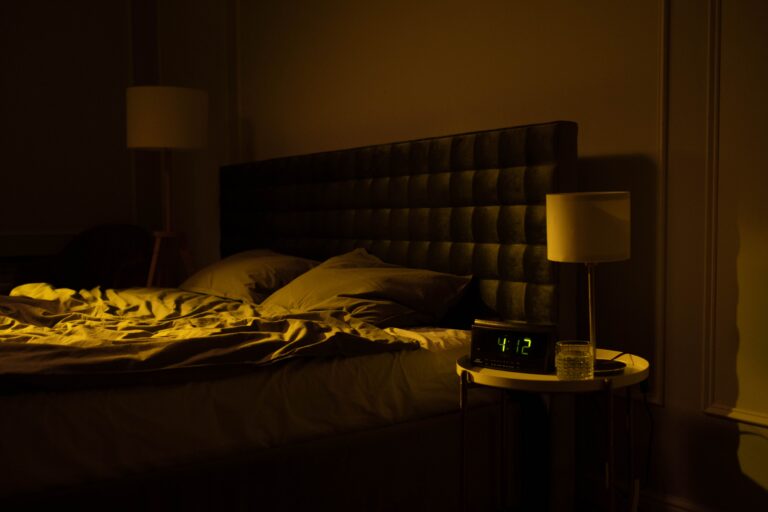
When you look at these examples, staying up late suddenly makes total sense.
If there was no room during your day for processing feelings because you were distracting yourself, no room for activities that made you feel connected, no room to claim your time and space, or no room to just be yourself without treating your thoughts like the villain, wouldn’t night be the obvious choice?
This dynamic is a classic example of revenge bedtime procrastination, where we delay sleep to regain a sense of freedom and personal control after a day full of demands.
When you put a lens of curiosity on your habits, you realize the habit itself isn’t the main issue. There is something deeper going on, something else demanding your attention, some unaddressed need waiting to be heard
Why Revenge Bedtime Procrastination Isn’t About Willpower
The link between sleep and mental health shows us that night-time struggles are rarely about a lack of willpower. What if, instead of fighting the habit first, we started creating room for those exact same needs during the daytime? Wouldn’t that make it so much easier to wind down when night comes?
Here is what creating that room during the day could look like:
- If your freedom feels curtailed all day: What if you started drawing small boundaries? What if you carved out just one hour during the day to do things you feel connected with, even if they aren’t tied to productivity?
- If you deal with overthinking at night: What if you started acknowledging fear as and when you experience it during the day? What if you named it and created a few moments of pause, instead of pretending you weren’t affected by it? What gentle reminder can you give yourself when you really need a sense of support to not let that fear engulf you?
- If you feel exhausted from masking: What if you took a walk to create a breather from environments where you feel pressured to perform?
There are so many small shifts like these that can help return night-time back to being all about sleep.
Reframing Your Night-time Ritual
As you read this today, if this resonates with you, start by asking yourself these two questions:
1. What does my night time or sleep habit (the one that I really want to change) look like ?
{Note that even those sleep patterns that are not conscious often do have some root in how we deal with our thoughts and emotions.}
2. What needs does it fulfill?
And now convert it into an I need sentence (I need more space, I need more freedom to choose, I need more support)
When you notice what is secretly helpful about your habits, you start being less judgmental with yourself and much more creative around finding healthy alternatives to. Curiosity is always the ultimate tool, especially when it comes to revenge bedtime procrastination.
Find Support Beyond Judgement
If you find this fascinating, exploring what the night-time gives us is just one of the many exercises we dive into together. In our mental health community, we listen closely and curate events and conversations around real, lived experiences.
If this curiosity hits a core and you wish to explore your patterns beyond the lens of judgment and shame, deeper work can make all the difference.
Seeking therapy in Kolkata can give you a safe, supportive space to explore these underlying needs, gently untangle what is keeping you up, and build a relationship with rest that actually lasts.
If you are in Kolkata, you can avail offline counselling sessions with our clinical psychologist in Kolkata, to not only explore your thoughts or patterns, but also integrate it with how you experience it in your body.